
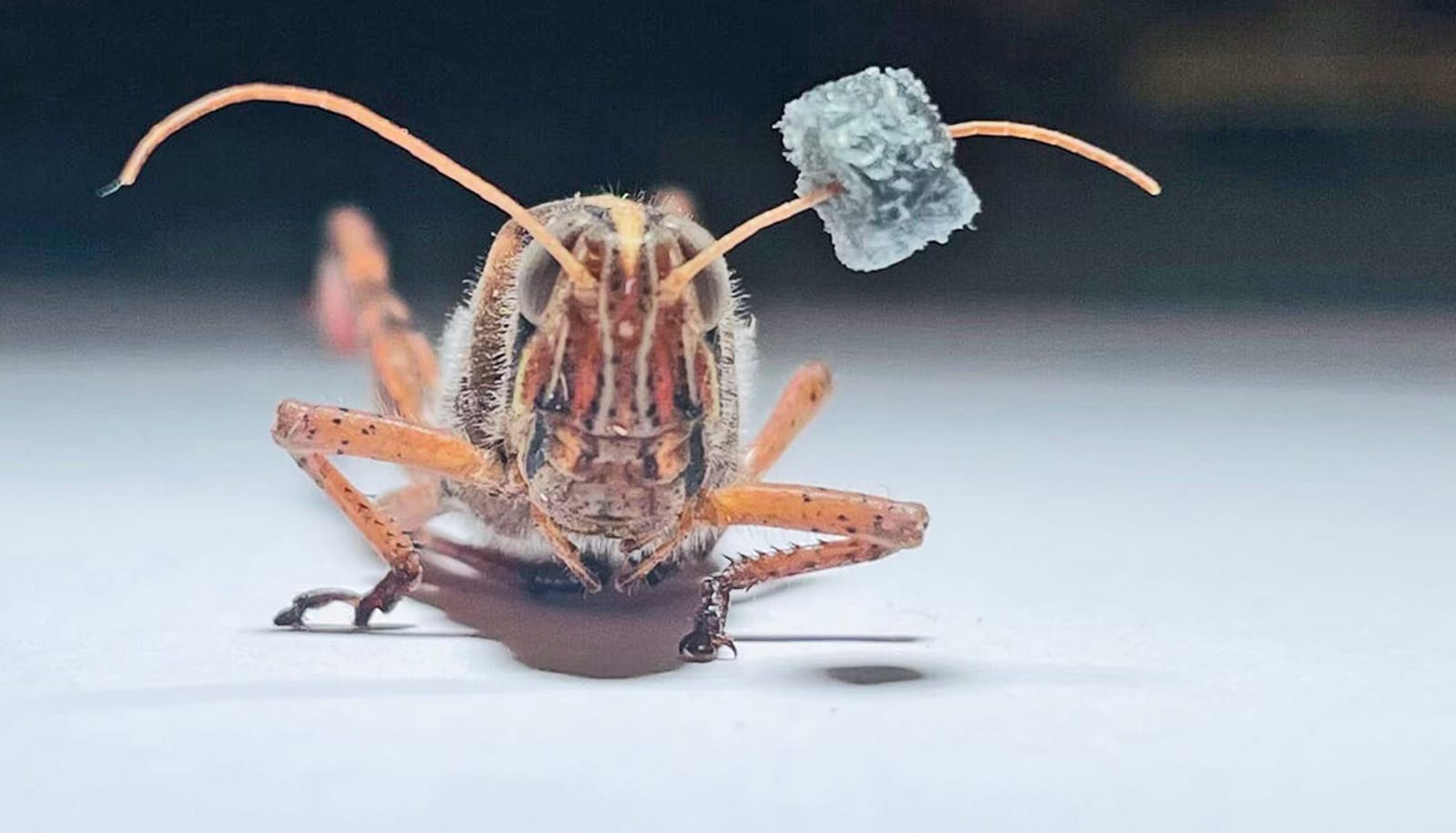
Locusts could help detect chemical weapons
Scientists have developed a system that uses locusts' natural sensing abilities combined with nanomaterials to detect chemical compounds. The hybrid system improves the detection of trace chemicals, including those found in explosives. The research could lead to new methods for detecting chemical weapons and aiding in disaster response.
Researchers at Washington University in St. Louis created a system that uses locusts with nanomaterial-coated antennae to detect chemical compounds more effectively than traditional methods.
This technology could improve safety in dangerous environments by helping detect harmful chemicals, potentially saving lives during disasters or in areas with chemical threats.
The project shows how combining natural and technological strengths can lead to practical solutions, offering a hopeful example of innovation that benefits society.
upbeatBytes summarizes in its own words and links to the original publisher — it doesn't host the article.