
Orbiting Stars Give Clues to a Quiescent Black Hole's Mass
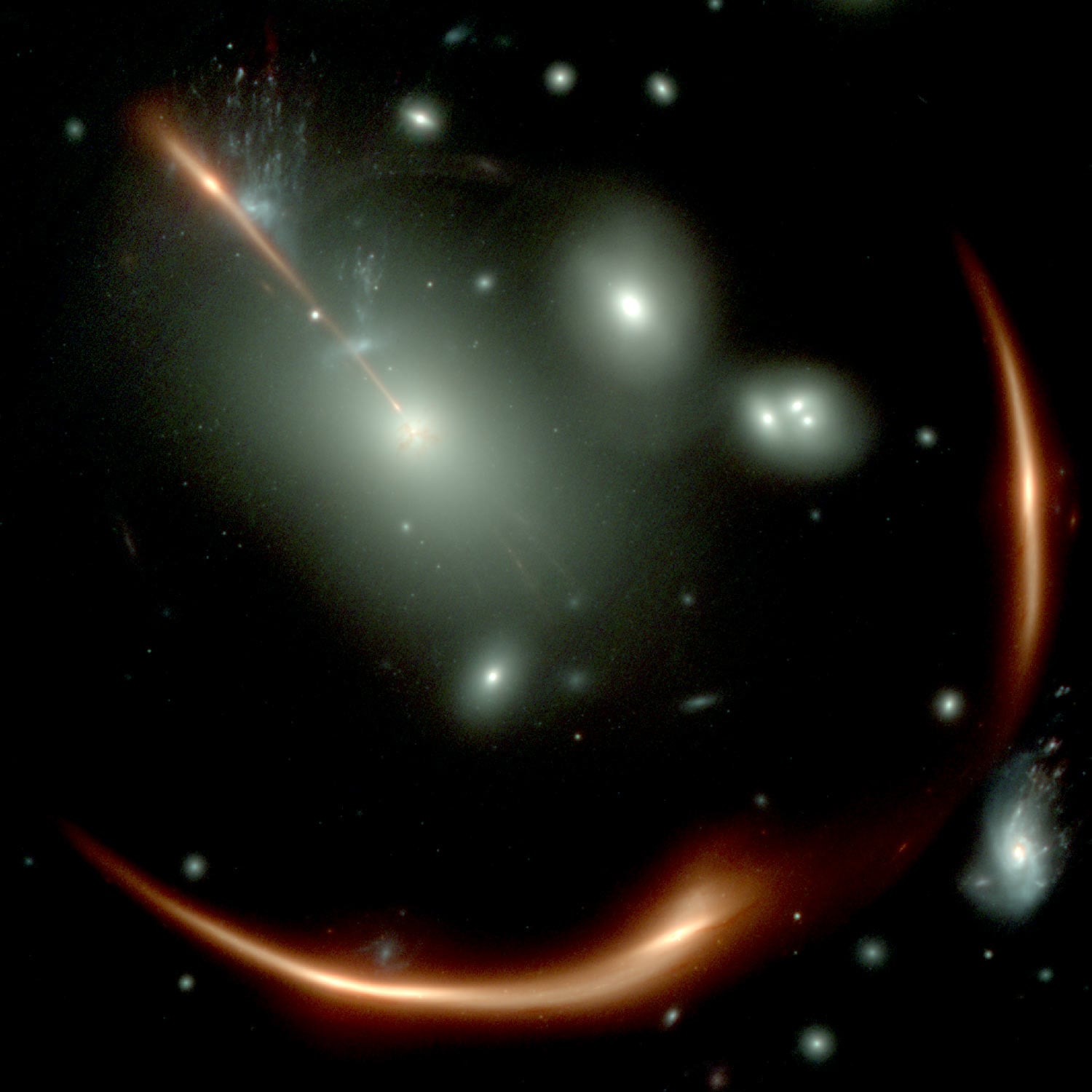
Astronomers used the James Webb Space Telescope and gravitational lensing to measure the mass of a dormant supermassive black hole in a galaxy 10 billion light-years away, revealing it has the mass of about 6 billion Suns. This is the most distant quiescent black hole ever studied, offering insights into the early Universe. By analyzing the motion of nearby stars and using gravitational lensing to magnify the view, researchers determined the black hole's mass without direct observation of its activity. The technique marks a significant advancement in studying distant, inactive black holes.
Astronomers used the James Webb Space Telescope and gravitational lensing to measure the mass of a dormant black hole in a distant galaxy.
This method helps scientists understand how supermassive black holes formed and influenced the early Universe.
It shows how advanced technology and clever observation can reveal hidden cosmic structures and deepen our understanding of the Universe.
upbeatBytes summarizes in its own words and links to the original publisher — it doesn't host the article.