
Flash-Melted Glass from Chang'e-5 Reveals a High Levels of Iron on the Moon
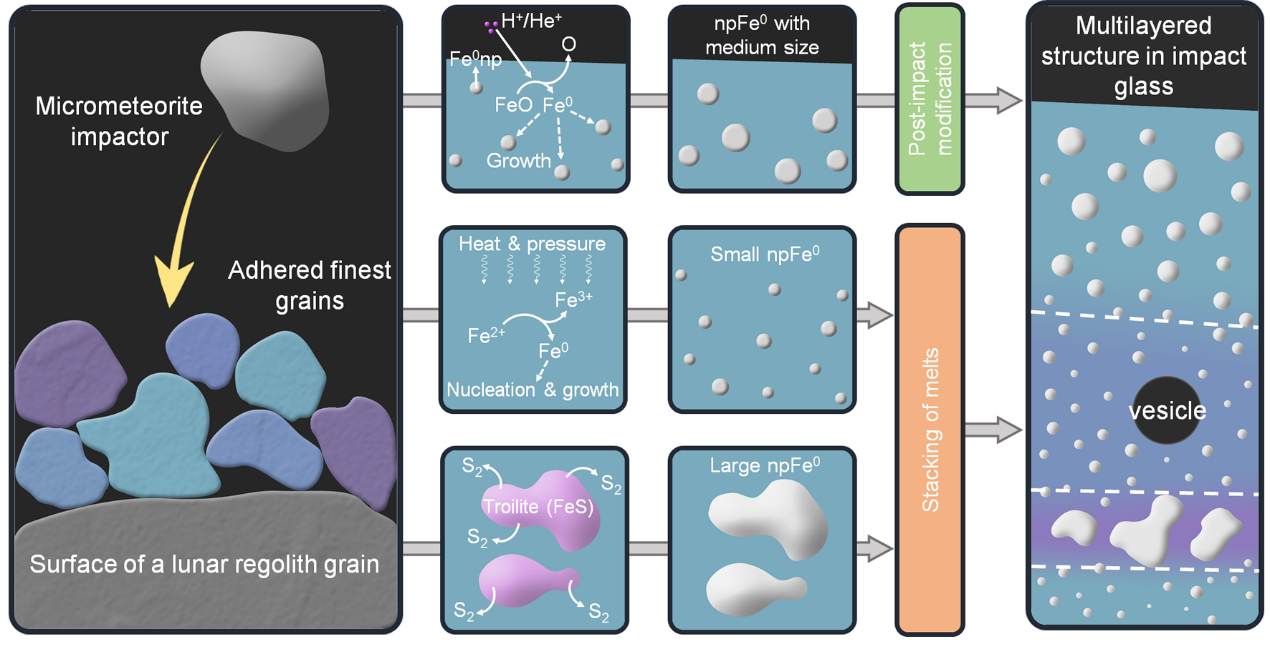
Analysis of flash-melted glass from the Chang'e-5 lunar samples revealed high concentrations of iron nanoparticles, formed through processes like silicate liquid immiscibility and chemical reactions triggered by meteor impacts. The iron particles were found in distinct layers within the glass, with some layers containing up to 30% pure metallic iron. These findings suggest that mature lunar soil may contain significantly more iron than previously estimated, which could aid future efforts to use lunar resources for construction and other purposes. The research provides new insights into space weathering and the potential for in-situ resource utilization on the Moon.
Scientists analyzed glass beads from the Moon, brought back by China’s Chang’e-5 mission, and found they contain high levels of iron nanoparticles.
This discovery helps explain how the Moon’s surface changes over time and could aid future efforts to use lunar resources for building on the Moon.
The findings offer practical insights for space exploration and highlight the value of returning samples from the Moon for scientific and human benefit.
upbeatBytes summarizes in its own words and links to the original publisher — it doesn't host the article.