
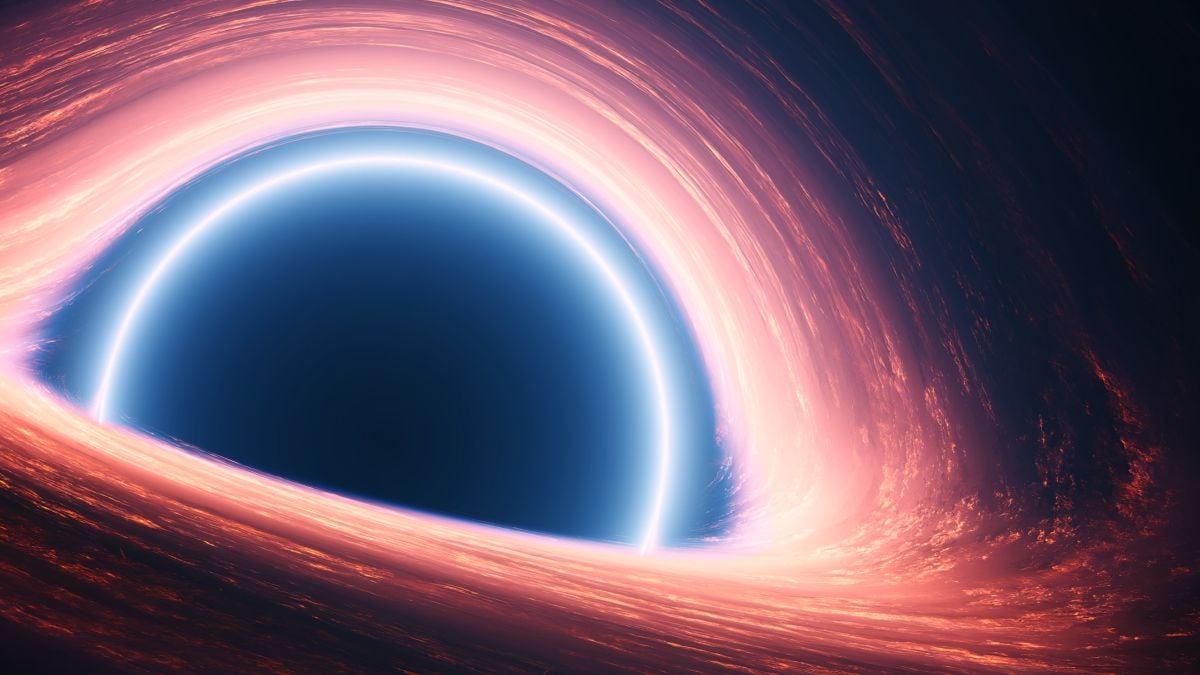
Physicists Simulated a Black Hole in a Lab. Then It Started to 'Evaporate'.
Physicists have created a laboratory analog of a black hole using light and observed a process similar to Hawking radiation backreaction, where energy is transferred from the black hole to radiation. This experiment, conducted with ultrafast laser pulses in an optical fiber, provides new insights into how black holes might lose energy over time. The findings advance theoretical understanding and may help explain the mechanism behind Hawking radiation in real black holes.
Physicists created a lab-based black hole analog using light and observed a process similar to Hawking radiation evaporation.
This experiment helps scientists better understand how black holes lose energy over time, a key mystery in physics.
It shows how creative lab experiments can explore cosmic phenomena that are otherwise impossible to study directly.
upbeatBytes summarizes in its own words and links to the original publisher — it doesn't host the article.