
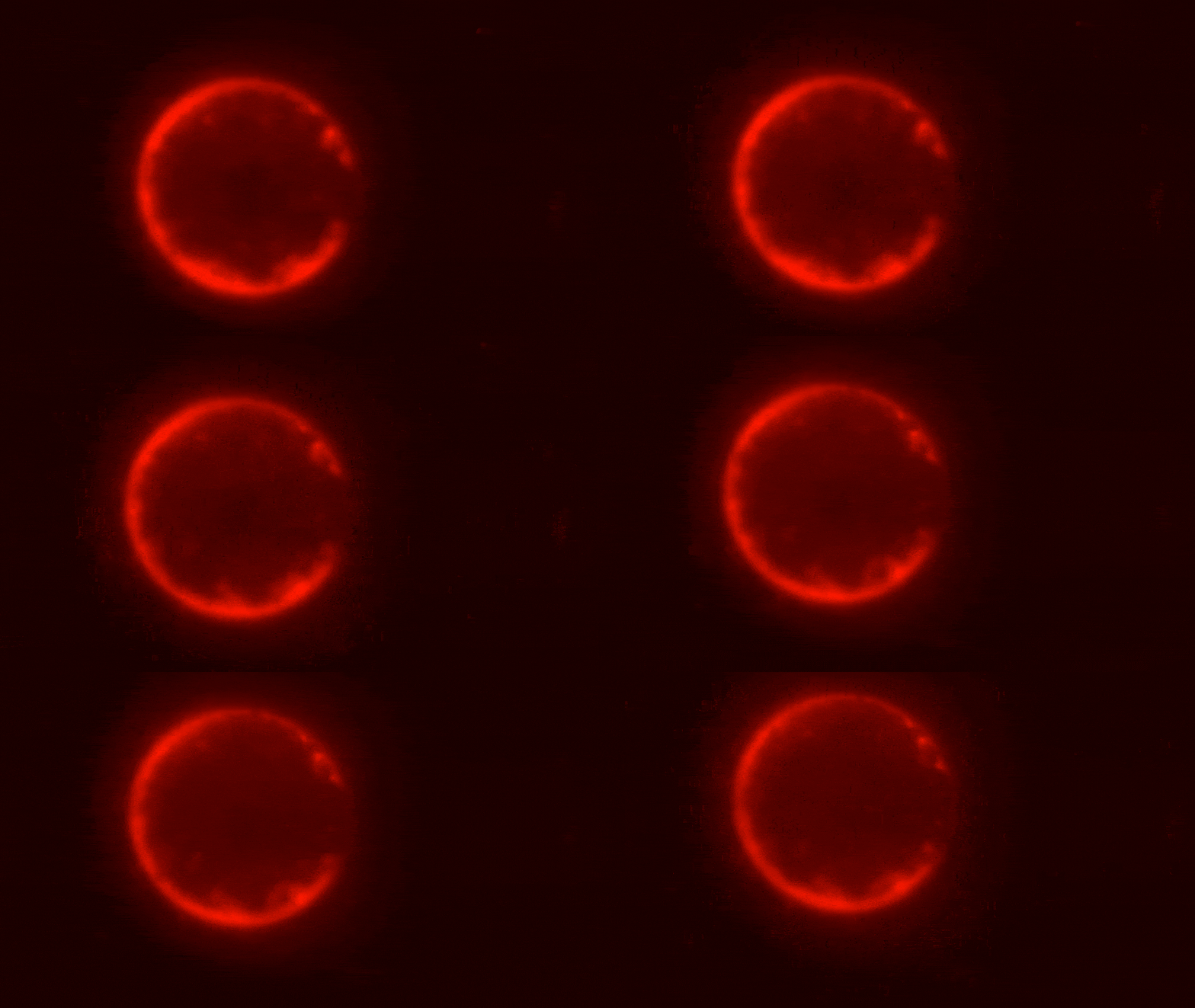
For The First Time, Scientists Say They've Built a Synthetic Cell From Scratch
Scientists at the University of Minnesota have created the first synthetic cell, named SpudCell, entirely from non-living components, which successfully undergoes a complete life cycle including reproduction. The cell contains a minimal genome and metabolic machinery, challenging previous assumptions about the complexity required for life. This achievement provides new insights into the fundamental processes of living systems and opens possibilities for future bioengineering applications. The research, though not yet peer-reviewed, has been shared by the team through a new bioengineering nonprofit.
Scientists have created a synthetic cell called SpudCell, built entirely from non-living components, that can grow, divide, and perform basic life functions.
This breakthrough challenges traditional views on what defines life and could lead to new advances in biology, medicine, and bioengineering.
The story highlights human curiosity and innovation, offering a glimpse into how science can push boundaries to understand and shape the future of life itself.
upbeatBytes summarizes in its own words and links to the original publisher — it doesn't host the article.