
Europa’s Ice Shell Secrets Unlocked by Ground Radar Study
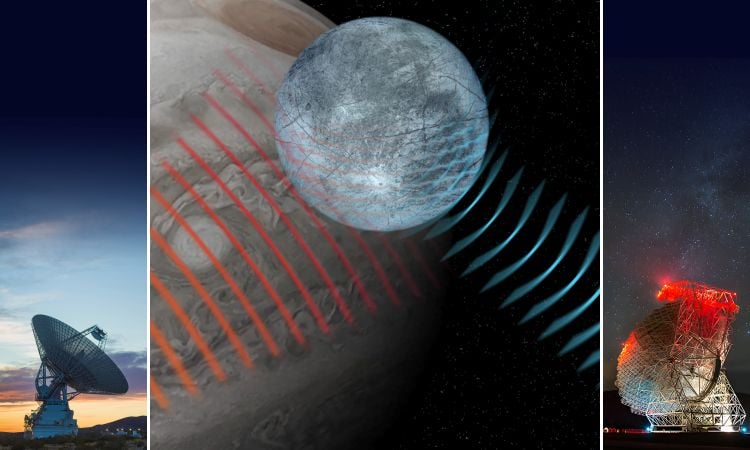
A ground-based radar study using NASA's Goldstone Solar System Radar and the Green Bank Telescope revealed that Europa's icy surface reflects radar signals more brightly than other planetary bodies, indicating it behaves like a mirror and confirming the presence of a phenomenon linked to water ice. The findings support the possibility of subsurface liquid water on Europa and demonstrate the effectiveness of ground-based radar for studying distant celestial objects. The results will aid upcoming missions like NASA’s Europa Clipper, which is en route to explore Europa in detail starting in 2030.
Scientists used ground radar to study Europa's ice shell, finding it reflects radar more than other icy bodies in the solar system.
This helps scientists better understand Europa's surface and supports the search for subsurface oceans that could potentially host life.
The study shows how Earth-based tools can advance space science, offering hope and practical insights for future missions to explore distant worlds.
upbeatBytes summarizes in its own words and links to the original publisher — it doesn't host the article.