
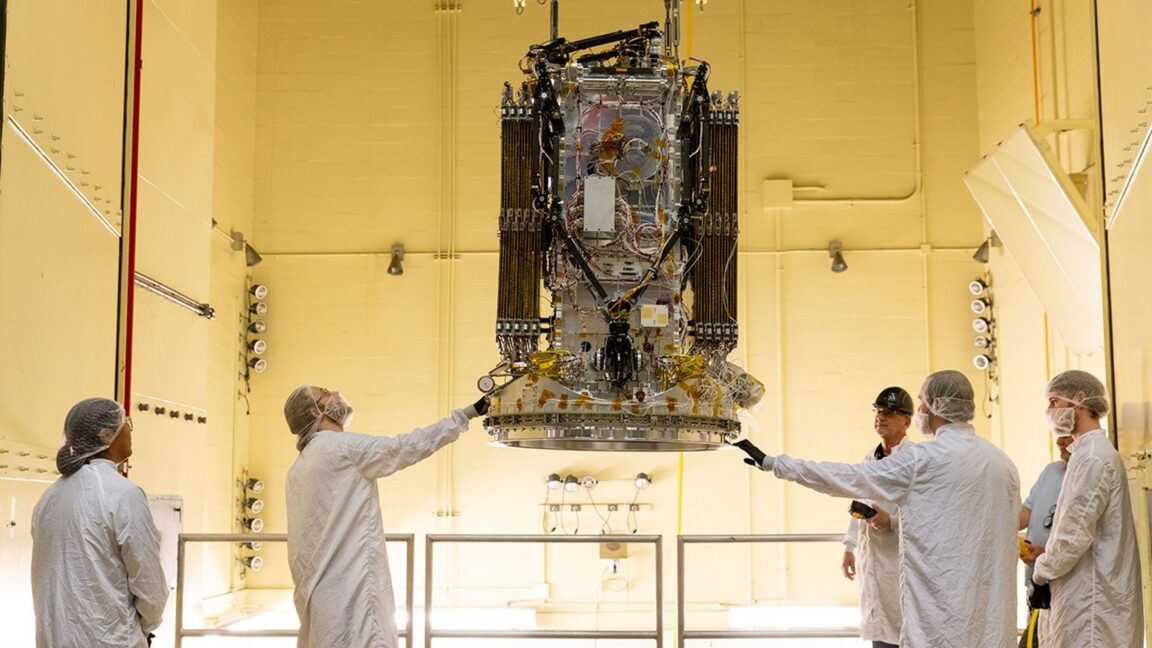
A bold satellite rescue mission came together in record time, but will it work?
A team led by Katalyst Space Technologies developed and launched a satellite called Link in under a year to rescue the aging Swift observatory, which was at risk of reentering Earth's atmosphere. The mission aimed to use robotic arms to latch onto Swift and raise its orbit to a safe altitude, extending its operational life. The effort was driven by the scientific value of Swift in detecting gamma-ray bursts and the urgency of its declining orbit due to increased atmospheric drag from solar activity. The rapid development and execution of the mission represent a significant achievement in satellite servicing technology.
A satellite mission to save a valuable astronomy observatory from reentering Earth's atmosphere was launched in record time.
The mission highlights the urgency of preserving scientific assets in space and the potential of rapid-response technologies.
It shows how innovation and collaboration can address complex challenges, offering hope for future space preservation efforts.
Upbeat Bytes summarizes in its own words and links to the original publisher — it doesn't host the article.