
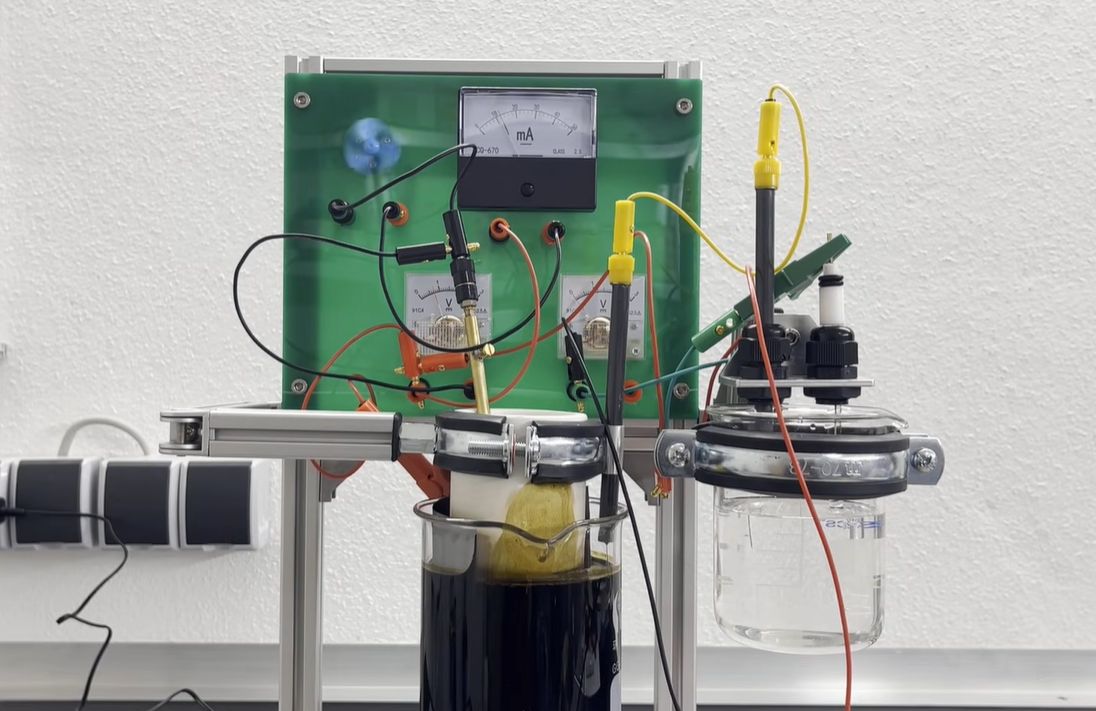
Building an Organic Flow Battery Based on Green Tea
A researcher created a flow battery using compounds from green tea as its electrolyte, making it safer for educational use. The battery uses carbon, platinum, and graphite electrodes, along with matcha powder rich in epigallocatechin gallate. While its performance is modest, it can power small devices, demonstrating the potential of organic flow batteries in teaching and research. This approach offers a low-cost, environmentally friendly alternative to traditional battery components.
A student built a flow battery using compounds from green tea, such as gallic acid and polyphenols, as a safe alternative for educational experiments.
This innovation offers a safer, more accessible way to teach about energy storage, reducing risks from traditional chemicals in school labs.
It highlights creative, low-cost solutions that make science education more engaging and environmentally friendly, inspiring future inventors.
Upbeat Bytes summarizes in its own words and links to the original publisher — it doesn't host the article.