
These tiny holes could change how the world cleans water
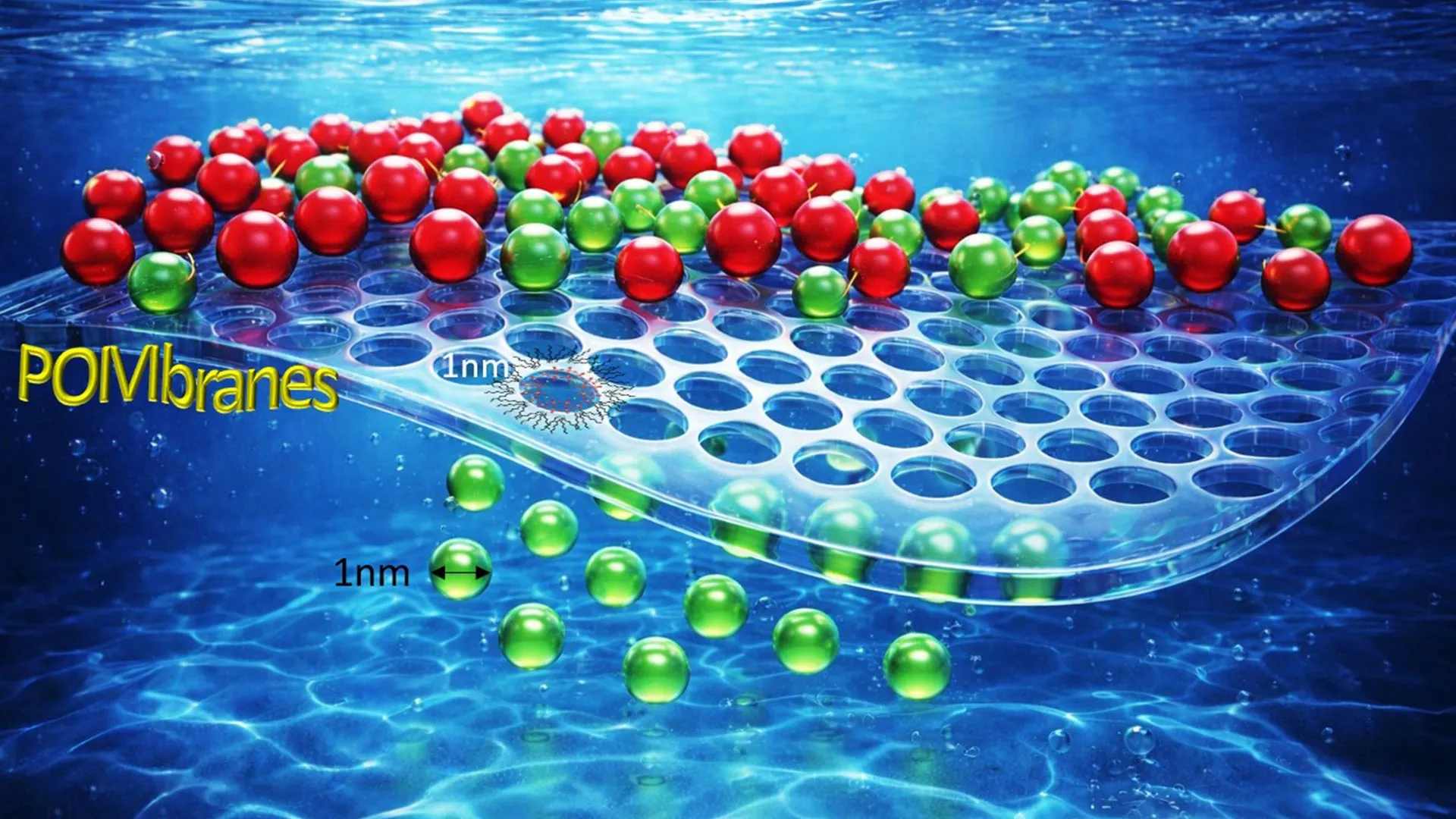
Scientists have developed a new filtration membrane with uniform one-nanometer pores inspired by natural systems, which could significantly improve water recycling and chemical purification by reducing energy use and increasing efficiency. The membrane, called a POMbrane, uses stable metal clusters to create precise, unchanging pores that allow for highly selective molecular separation. This innovation addresses limitations of traditional filters and offers a more sustainable solution for industrial separation processes. The technology has potential applications in pharmaceuticals, textiles, and other industries that rely on efficient purification methods.
Scientists have created a new filtration membrane with perfectly uniform one-nanometer pores that can filter molecules with high precision.
This technology could significantly reduce energy use in industrial processes like water recycling and chemical purification, cutting carbon emissions.
The innovation offers a cleaner, more efficient way to handle water and chemicals, supporting sustainable industrial practices and environmental protection.
Upbeat Bytes summarizes in its own words and links to the original publisher — it doesn't host the article.