
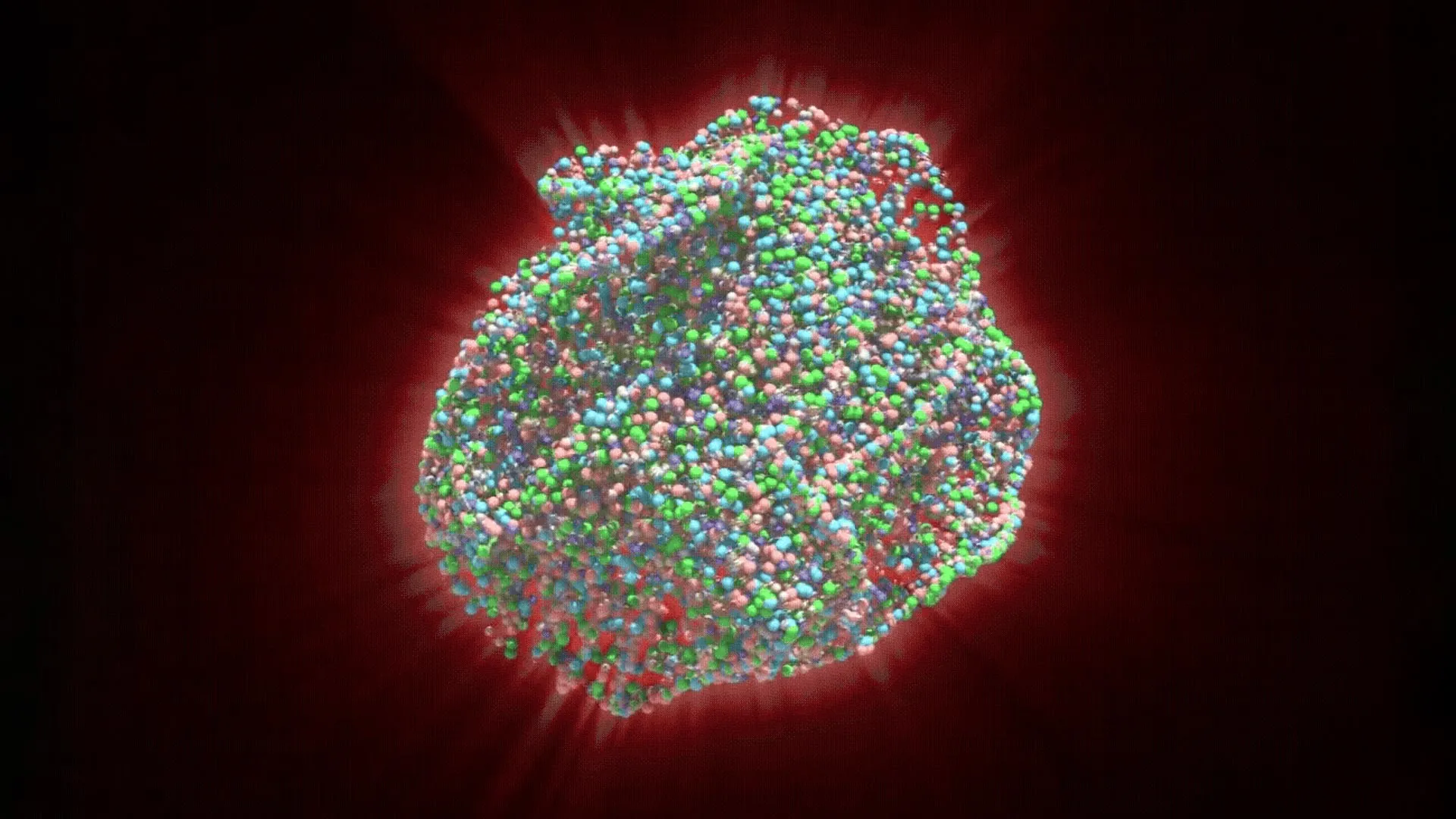
Large Hadron Collider reveals evidence of Big Bang matter in surprisingly small collisions
Scientists at the Large Hadron Collider found evidence that small atomic collisions can create a state of matter similar to what existed right after the Big Bang. This matter, called quark-gluon plasma, forms at extremely high temperatures and was thought to require heavy nuclei. New findings show it can also form in collisions with oxygen and neon nuclei, challenging previous assumptions.
Researchers at the Large Hadron Collider discovered that smaller atomic collisions, like those involving oxygen and neon, can create quark-gluon plasma, a state of matter that existed shortly after the Big Bang.
This discovery changes how scientists understand the conditions needed to recreate early universe matter, offering new ways to study the universe's origins and the fundamental forces that shaped it.
The findings show that scientific progress can come from unexpected places, highlighting the value of exploring new methods and challenging old ideas to deepen our understanding of the universe.
upbeatBytes summarizes in its own words and links to the original publisher — it doesn't host the article.