
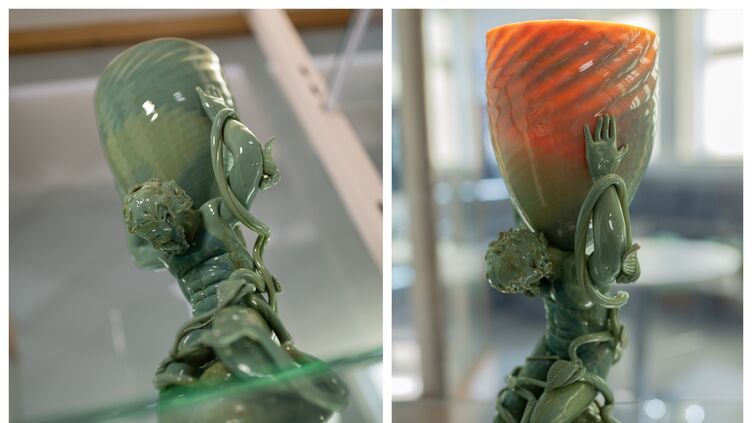
Romans Made Color-Changing Glass With Ancient Nanotechnology. Scientists Just Discovered How to Replicate the 1,600-Year-Old Marvel
Scientists have discovered how to recreate the ancient Roman color-changing glass that was used in the Lycurgus Cup. The glass changes color depending on the light it's viewed in, and researchers have now replicated this effect using similar materials and techniques. The discovery helps explain the advanced nanotechnology used by the Romans over 1,600 years ago.
Researchers at the University of Sheffield recreated the color-changing glass from the Lycurgus Cup, a Roman artifact that appears green in reflected light and red when light passes through it. They used nanoparticles of silver and gold, similar to those used by ancient Romans, to achieve the effect.
The discovery shows how advanced ancient Roman technology was and provides insight into their scientific knowledge. It also highlights the potential for using similar nanotechnology in modern applications, such as in optics and materials science.
The story demonstrates human ingenuity across time and shows how modern science can learn from ancient techniques. It offers a sense of wonder and connection to the past, emphasizing the value of historical knowledge in today's world.
upbeatBytes summarizes in its own words and links to the original publisher — it doesn't host the article.