
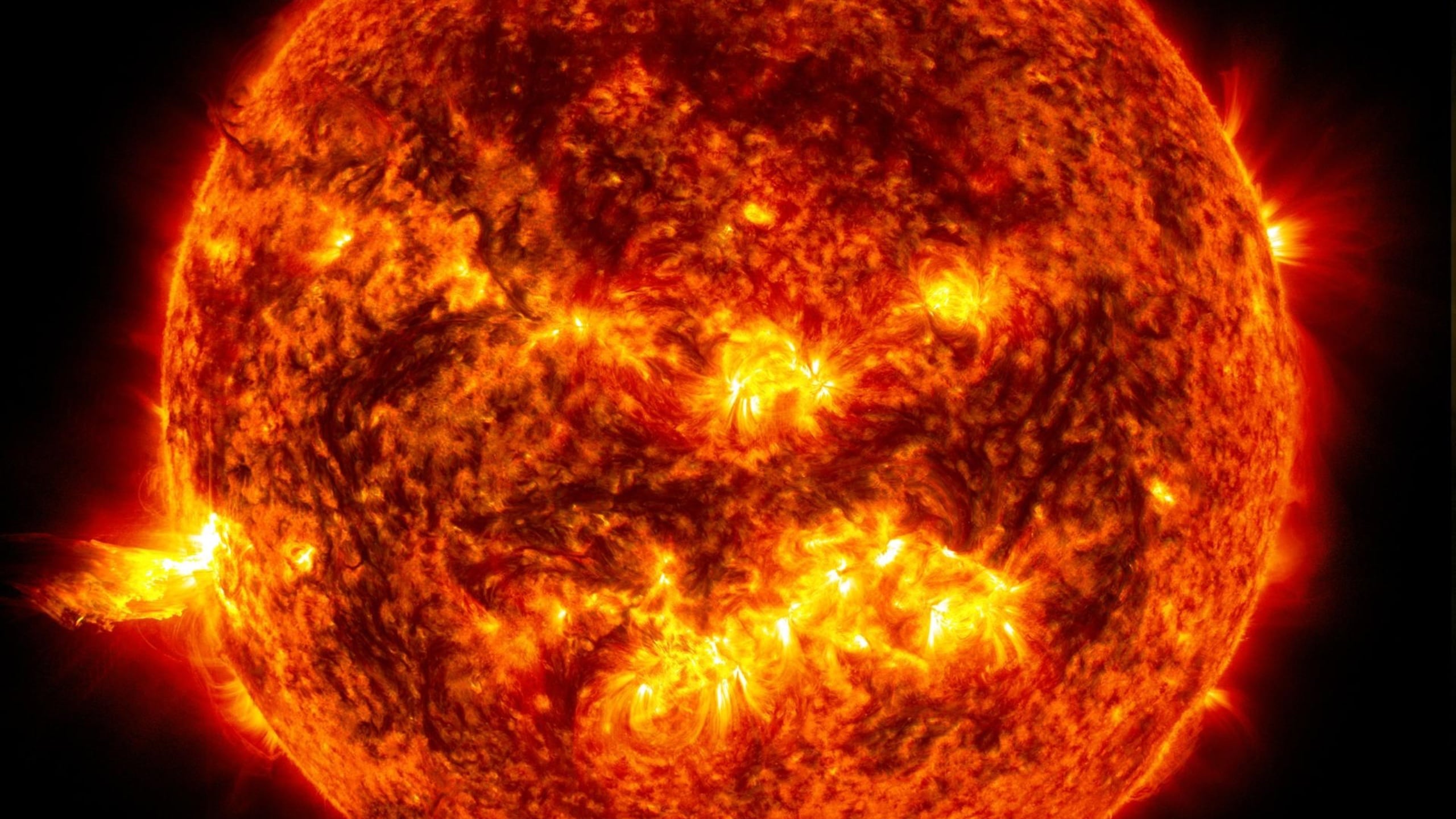
Scientists Simulated Solar Explosions in The Lab – And May Have Solved One of The Sun's Biggest Mysteries
Scientists in China conducted a lab experiment that may help explain how the Sun's outer atmosphere stays much hotter than its surface. They used lasers to create plasma and observed how magnetic fields can generate heat through a process called magnetic reconnection. The experiment showed higher temperatures when plasma structures formed, suggesting a possible mechanism for solar heating.
Scientists used lasers to create plasma and studied how magnetic fields can generate heat, which may explain why the Sun's outer atmosphere is much hotter than its surface. The experiment showed that structured plasma produced higher temperatures than smooth plasma.
Understanding how the Sun's atmosphere stays hot could improve space weather predictions and help protect satellites and power grids from solar activity. It also advances knowledge of fundamental physics processes in space.
The experiment shows how scientific research can uncover natural phenomena through controlled testing, offering insight into the universe and potential benefits for technology and safety on Earth.
upbeatBytes summarizes in its own words and links to the original publisher — it doesn't host the article.