
Tiny Gold Nanogaps Could Crack the Chirality Puzzle
Scientists have developed a new method using tiny gold nanogaps to detect the chirality of amino acids, which could help identify signs of life in space. The technique uses quantum tunneling to distinguish between left-handed and right-handed amino acids with high accuracy. It could make space missions more efficient by reducing the need for heavy equipment.
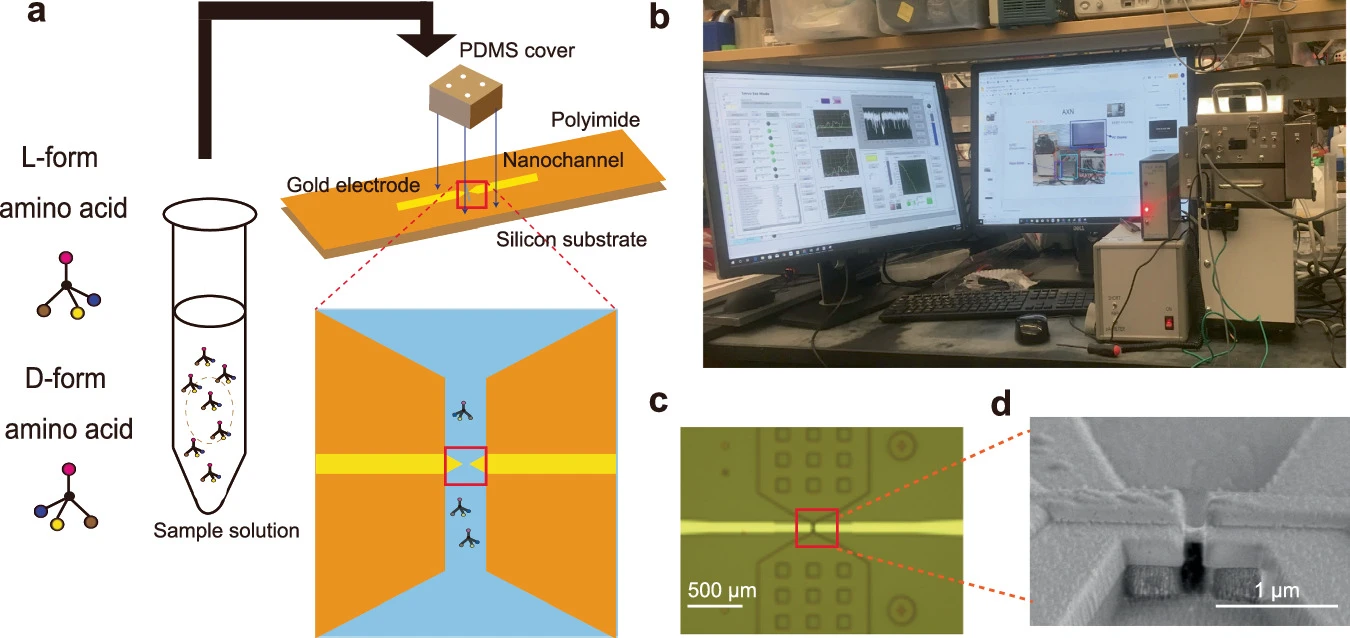
Researchers created a nanogap device with gold wires that can detect the chirality of amino acids through electrical signals. The device works by measuring how amino acids affect electron tunneling between the wires. It was tested on both lab samples and real-world environmental samples.
This technology could improve the search for life beyond Earth by making it easier to detect biosignatures in space. It reduces the need for complex and heavy equipment, which is important for space missions. The method is also sensitive enough to work with very small sample sizes.
The development shows how small-scale scientific innovations can have big impacts on space exploration. It offers a practical and efficient way to study life’s building blocks, which is relevant to both science and future space missions. The approach highlights the potential of nanotechnology in solving complex scientific challenges.
upbeatBytes summarizes in its own words and links to the original publisher — it doesn't host the article.