
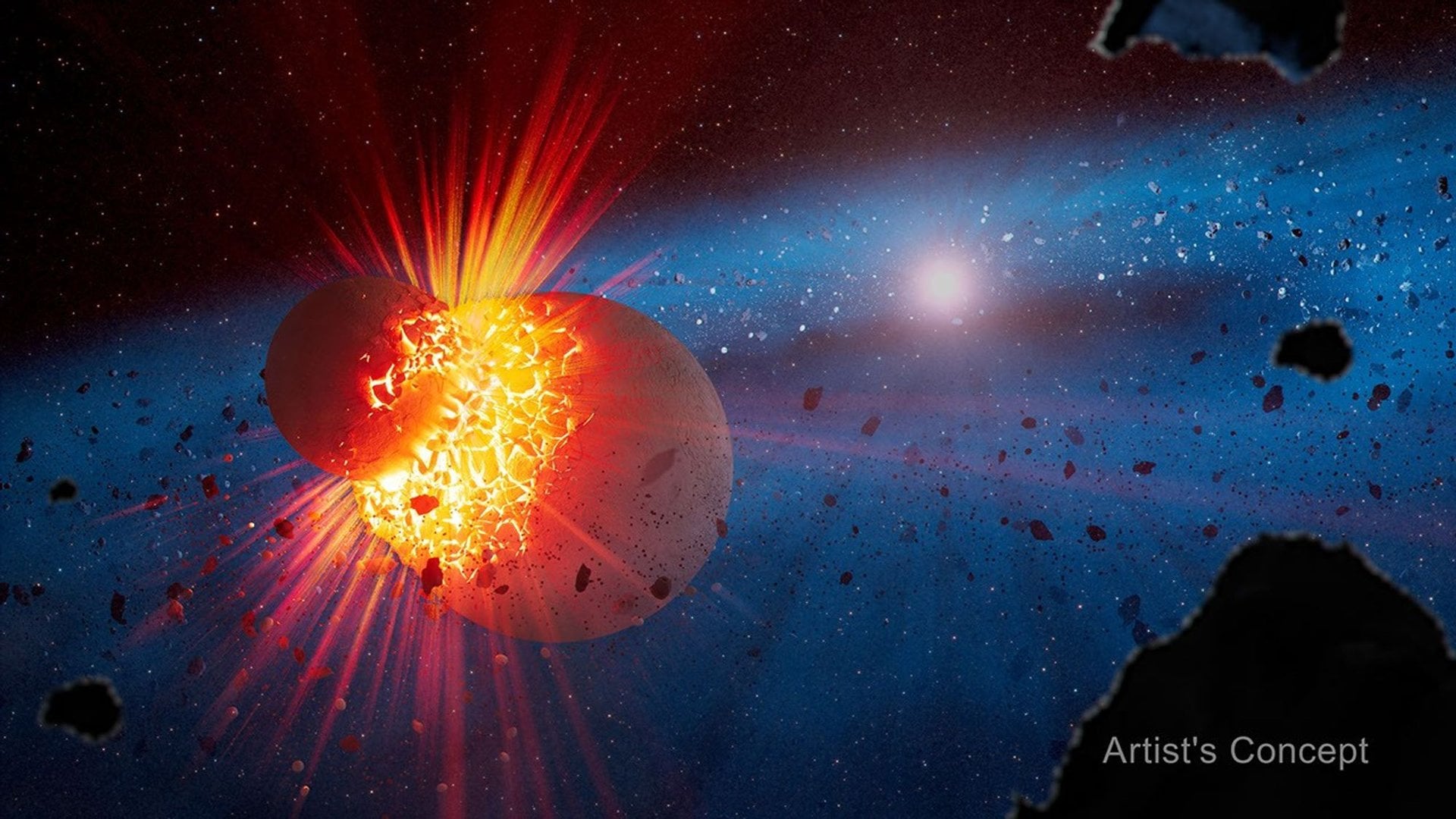
Webb Observes "Extreme Debris Disks," Providing a Window into the Early Solar System
Astronomers used the James Webb Space Telescope to study extreme debris disks around young stars, which may help explain the early history of our solar system. These disks show signs of violent collisions similar to those that shaped Earth and the Moon. The findings suggest such disks are rare and offer new insights into planetary formation.
Scientists observed young star systems with extreme debris disks, which show signs of high-energy collisions similar to those in the early solar system. These disks are rare and provide clues about how planets form.
Understanding these disks helps scientists learn about the processes that shaped our solar system and other planetary systems, offering insights into the origins of planets and their environments.
The research highlights how space telescopes like Webb help uncover the history of our universe, providing a deeper understanding of planetary formation and the conditions that led to life on Earth.
upbeatBytes summarizes in its own words and links to the original publisher — it doesn't host the article.