
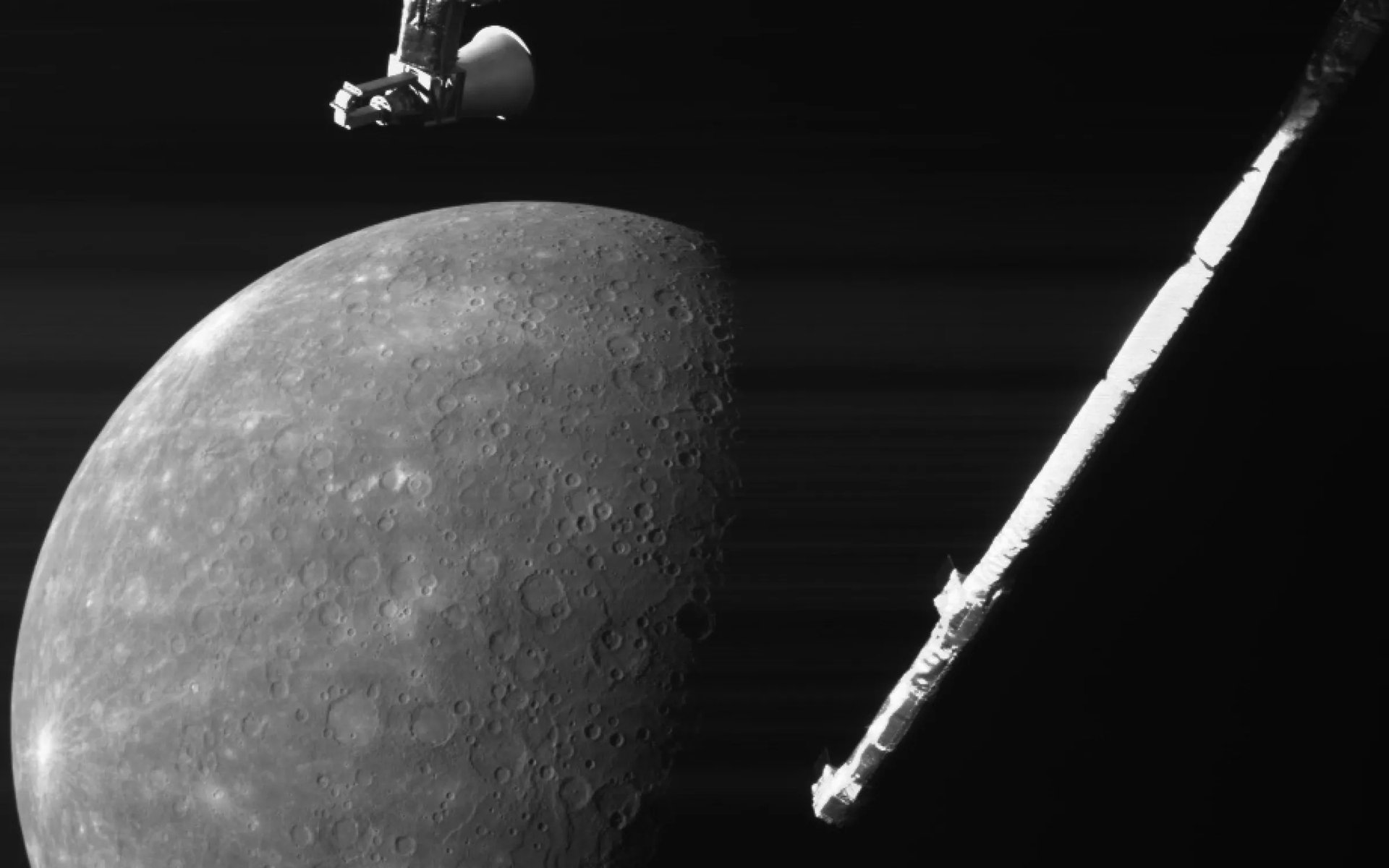
BepiColombo Makes Up-Close Measurement of Mercury's Solar Bombardment
The BepiColombo mission made a close flyby of Mercury, collecting data on how solar particles affect the planet. A study using data from the mission shows how solar eruptions impact Mercury's surface and could help predict space weather. The findings may improve understanding of how solar storms affect Earth and space infrastructure.
A close flyby of Mercury by the BepiColombo mission allowed scientists to study how solar particles hit the planet's surface. The data showed that high-energy particles from the Sun can reach Mercury's surface, creating X-rays. This helps understand how planets protect themselves from solar storms.
The research helps improve space weather predictions, which are important for protecting satellites, power grids, and other infrastructure from solar storms. It also provides insights into how planets like Mercury and Earth respond to solar activity.
The study shows how space exploration can lead to practical benefits for life on Earth. It highlights the value of scientific research in understanding and preparing for natural phenomena that affect technology and society.
upbeatBytes summarizes in its own words and links to the original publisher — it doesn't host the article.