
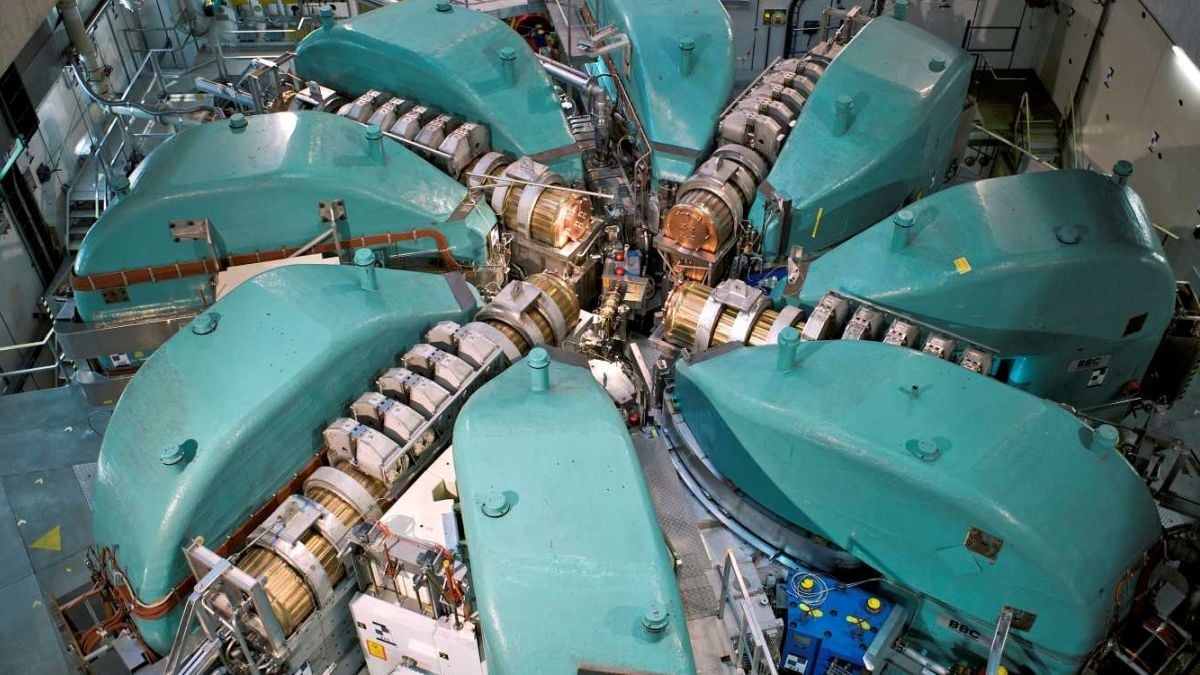
Physicists Build a 'Mad-Scientist' Antimatter Beam to Test Einstein's Theory of General Relativity
Physicists have created a beam of muonium, a particle containing antimatter, to study how gravity affects it. This could test Einstein's theory of general relativity. The experiment aims to observe how antimatter behaves under gravity before the particles decay.
Scientists developed a new way to create a focused beam of muonium, a short-lived particle made of antimatter, to study its gravitational behavior.
This experiment could confirm or challenge Einstein's theory of gravity, offering insights into the fundamental nature of the universe and how matter and antimatter interact.
The research shows scientific progress in exploring deep questions about physics, using innovative methods to test long-standing theories in a clear and methodical way.
upbeatBytes summarizes in its own words and links to the original publisher — it doesn't host the article.