
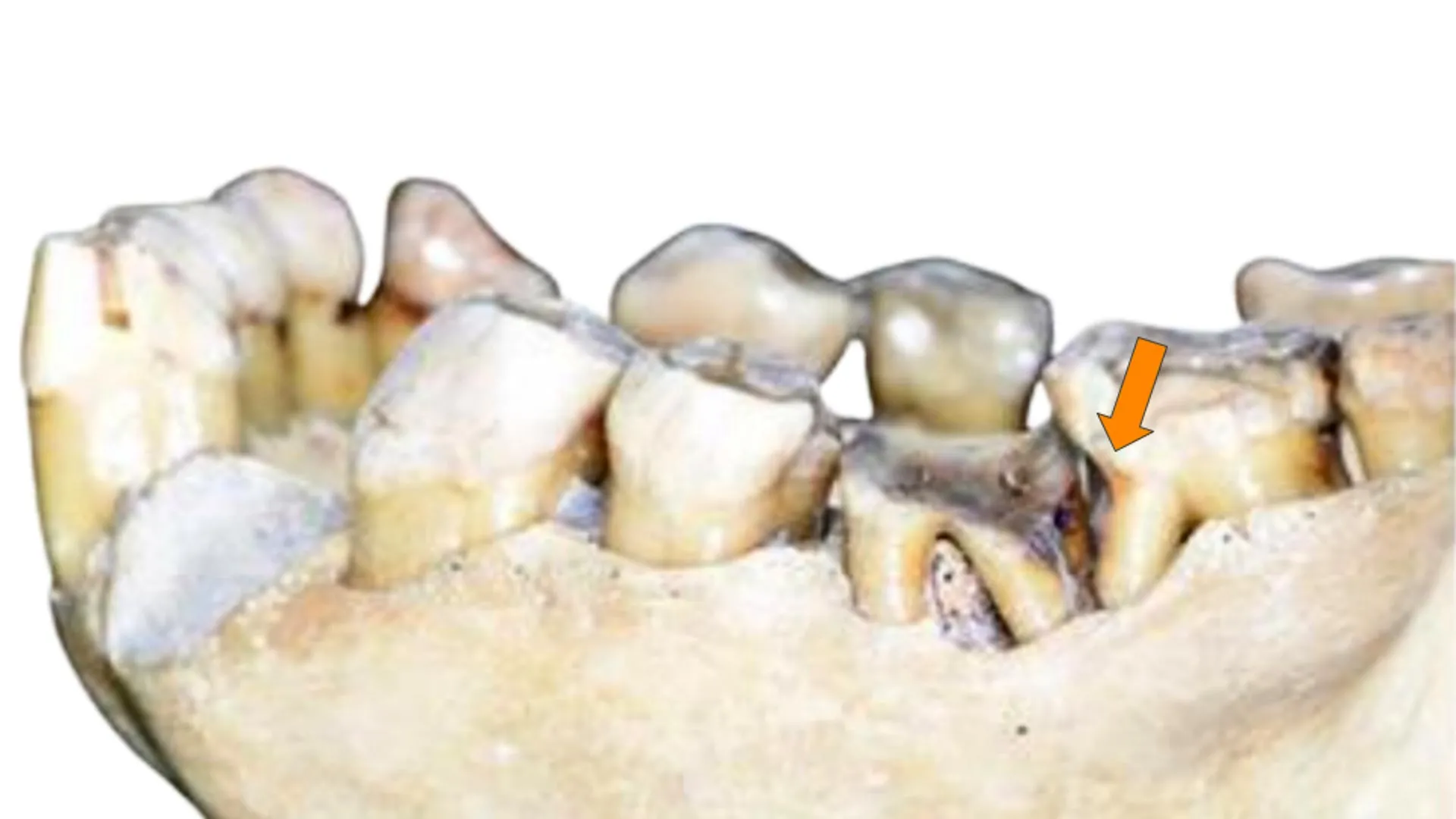
Scientists may have debunked one of humanity's oldest habits
A new study suggests that small grooves on ancient human teeth, previously thought to indicate tooth-picking, may instead result from natural wear observed in wild primates. The research also found that a common modern dental issue, abfraction lesions, is absent in fossil and living primates, suggesting it may be a consequence of modern human behaviors. These findings challenge previous assumptions about ancient dental habits and highlight how contemporary lifestyles may uniquely affect human teeth.
Scientists found that grooves on ancient human teeth, once thought to be from tooth-picking, may be natural wear instead.
This changes how researchers understand ancient human behavior and highlights how modern lifestyles affect dental health uniquely.
It shows how new research can challenge old ideas and improve understanding of both past and present human health.
upbeatBytes summarizes in its own words and links to the original publisher — it doesn't host the article.