
A search for one exotic particle uncovered two strange new structures
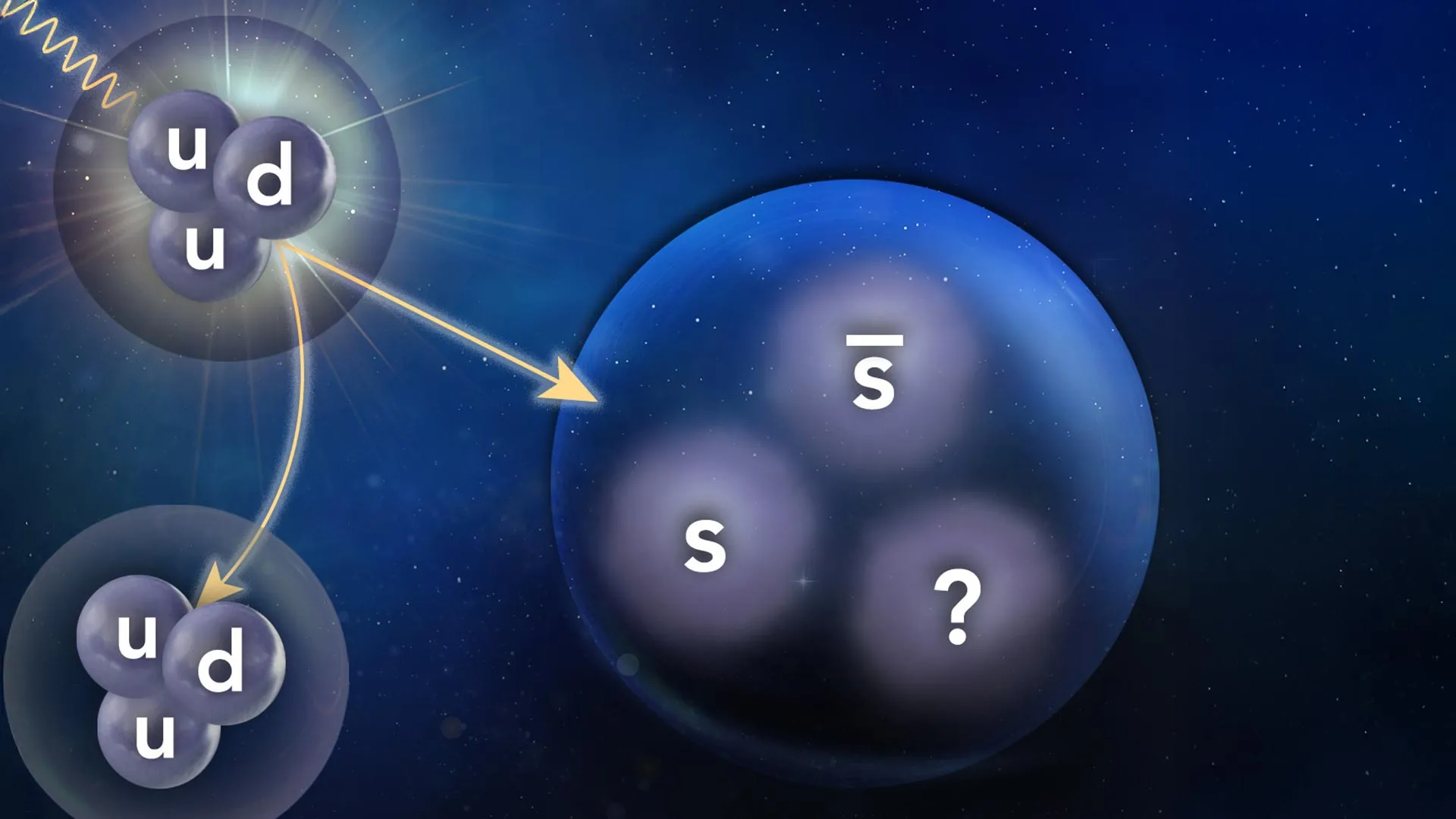
Scientists searching for a rare particle found two unexpected structures that may belong to a group of unusual subatomic particles. The discovery could help explain how quarks and gluons form matter. The findings were made at the Thomas Jefferson National Accelerator Facility and published in a scientific journal.
Researchers looking for a specific particle found two new structures that may be part of the XYZ states, a group of particles that don't fit the standard quark model. The discovery came from experiments using high-energy photons and protons.
The findings could improve understanding of how fundamental particles combine to form matter, offering new insights into the forces that shape the universe.
The discovery highlights ongoing scientific exploration and the potential for new knowledge, showing how curiosity-driven research can reveal unexpected aspects of the physical world.
upbeatBytes summarizes in its own words and links to the original publisher — it doesn't host the article.