
Webb’s mysterious little red dots may be hiding entire galaxies
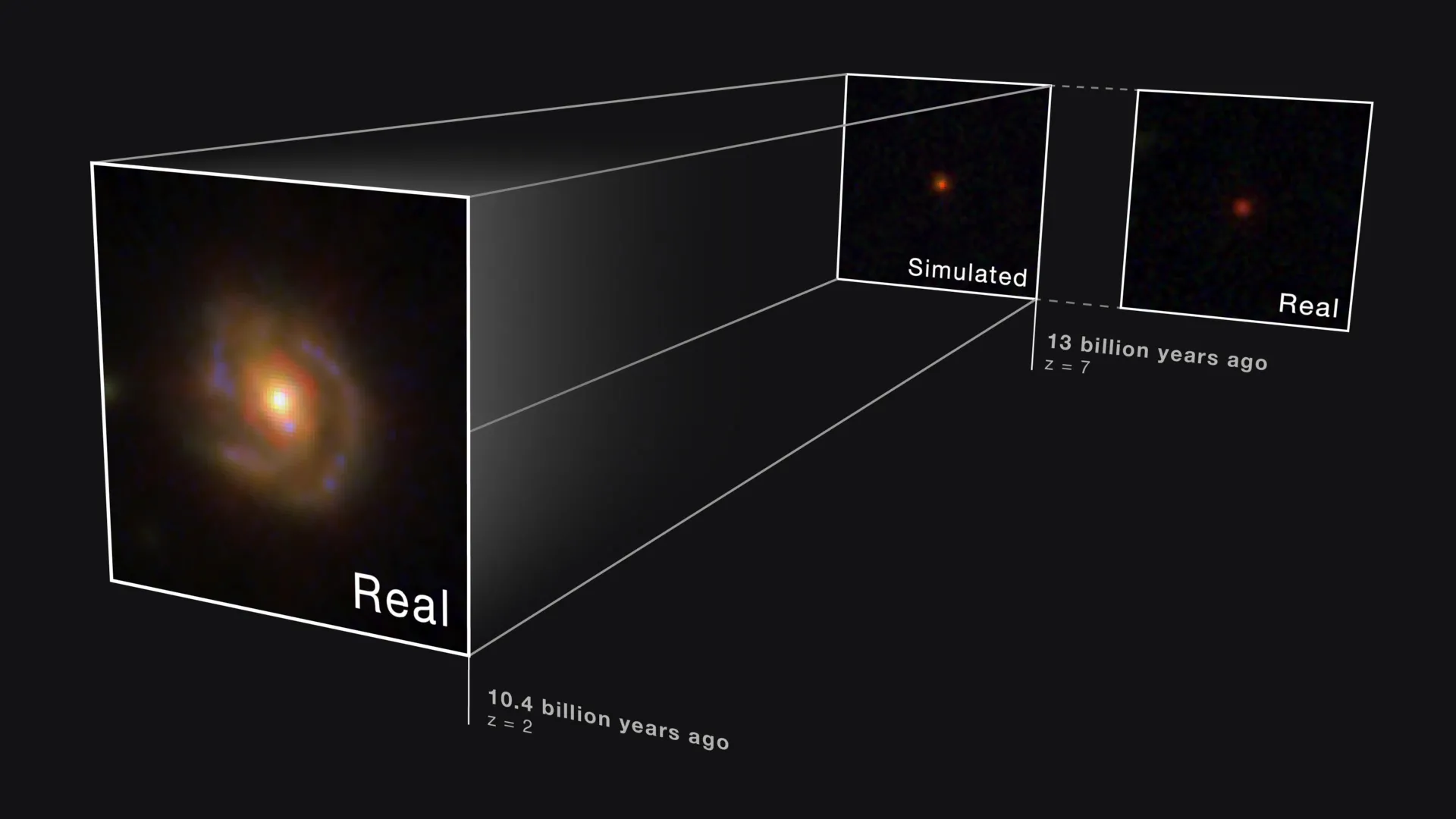
Astronomers studying the James Webb Space Telescope's mysterious "little red dots" found that a nearby spiral galaxy, called the "Saguaro," could explain their appearance. When viewed from great distances, the galaxy's structure disappears, leaving only a bright red center similar to the dots. This suggests the dots may be a temporary phase of active black holes in distant galaxies.
Researchers found that a nearby galaxy, when viewed from far away, looks like the mysterious red dots seen in the early universe. This suggests the dots may be a temporary phase of active black holes in distant galaxies.
This discovery helps explain a long-standing mystery in astronomy and provides a clearer picture of how galaxies and black holes evolve over time.
The findings offer a grounded explanation for a puzzling cosmic phenomenon, showing how scientific observation and analysis can uncover hidden truths about the universe.
upbeatBytes summarizes in its own words and links to the original publisher — it doesn't host the article.