
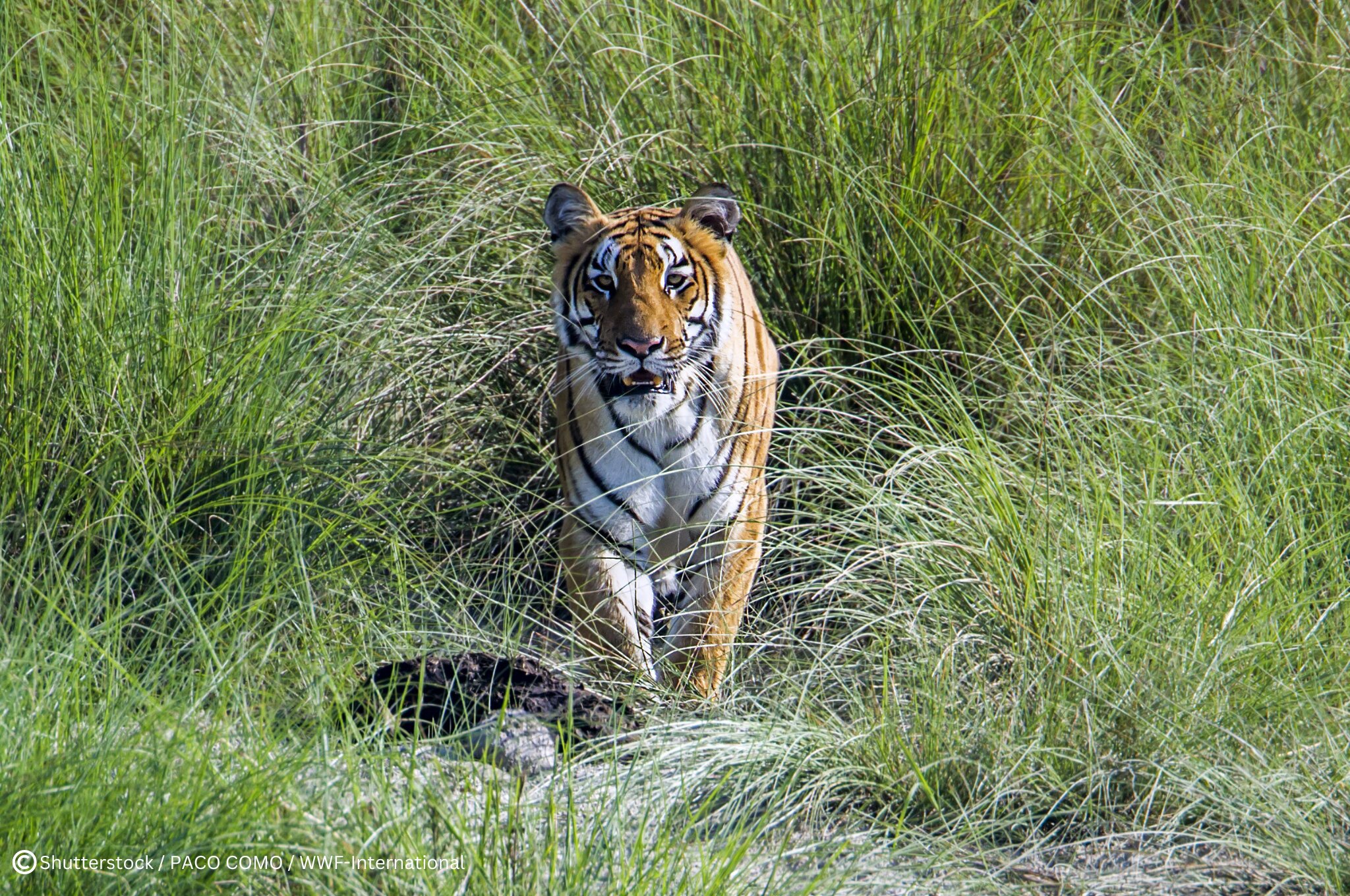
Nepal’s newest national parks drive tiger recovery, but new concerns arise
Nepal's tiger population has reached a record 429, with most growth occurring in newer national parks, while the second-oldest park, Bardiya, has seen a 10% decline. Researchers attribute the uneven distribution to factors like water availability, cross-border movement, and invasive species affecting older parks. Despite rising prey density in Bardiya, tiger numbers there have fallen, suggesting water management issues may be influencing their movement. The success in newer parks highlights progress in tiger conservation but raises concerns about potential human-wildlife conflicts and displacement of leopards into human areas.
Nepal's tiger population has grown to 429, but most of the increase is in newer national parks, while older ones like Bardiya are losing tigers.
This uneven growth raises concerns about wildlife displacement, human-wildlife conflict, and the need for better water and habitat management across parks.
The story highlights both conservation progress and emerging challenges, offering insights into how to balance wildlife protection with human needs.
upbeatBytes summarizes in its own words and links to the original publisher — it doesn't host the article.