
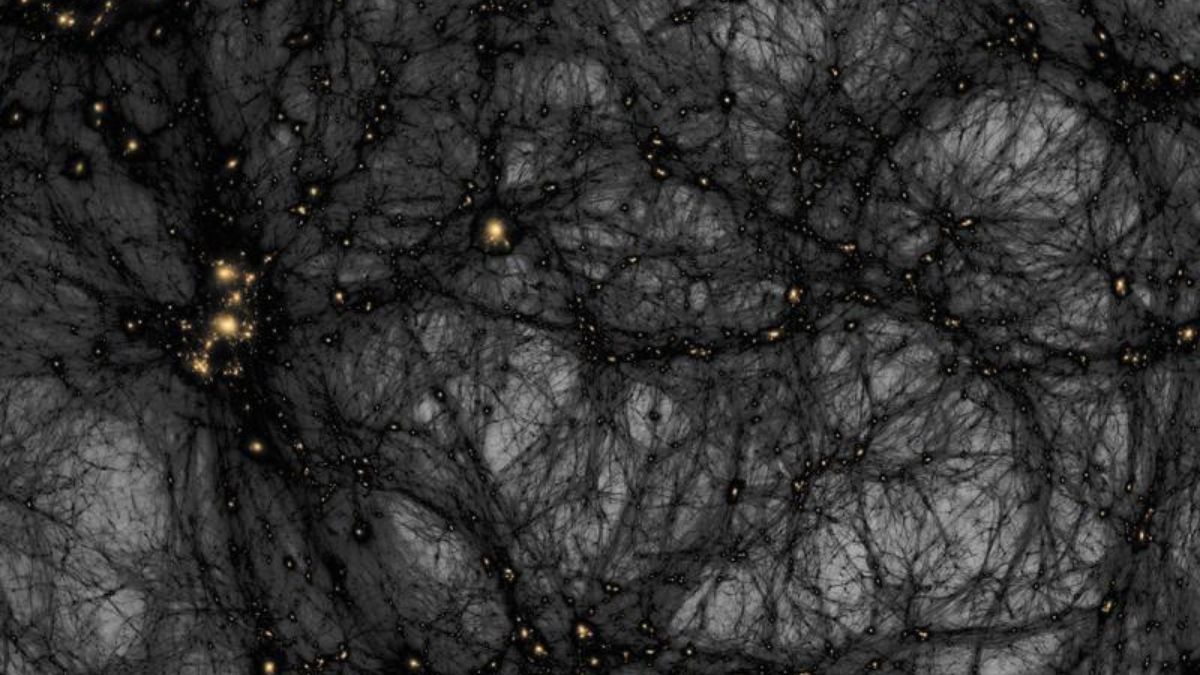
Dark Matter May Be Transforming Into Weird Particles That Fill The Universe With Gravity
New research suggests dark matter may be decaying into hypothetical gravitons, which could then convert into detectable photons through magnetic fields in the universe's vast filaments. This process, based on the Gertsenshtein effect, offers a novel approach to studying dark matter by searching for indirect evidence in the form of gamma-ray photons. The study proposes that these transformations may occur within the cosmic web's filaments, where weak but coherent magnetic fields could facilitate the conversion. This approach could provide new insights into dark matter's behavior and the nature of gravity.
Scientists suggest dark matter may be decaying into hypothetical gravitons, which could then convert into light particles called photons in space.
This new idea offers a fresh approach to detecting dark matter, which makes up most of the universe but has so far remained invisible and undetected.
The research highlights creative scientific thinking and the potential for new discoveries that could reshape our understanding of the universe.
upbeatBytes summarizes in its own words and links to the original publisher — it doesn't host the article.