
Scientists Map Moon Regolith to Aid Lunar Bases
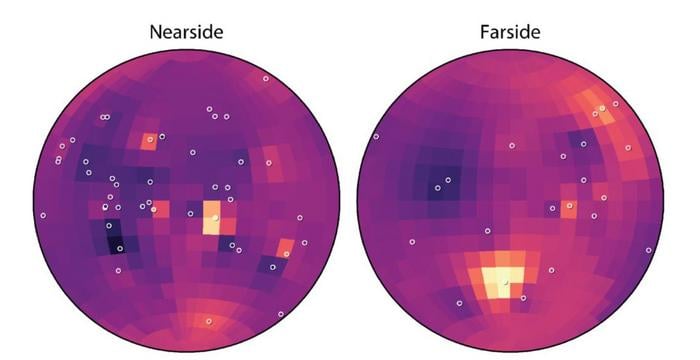
Scientists have mapped the thickness of lunar regolith across the Moon's surface, finding it to be about 4 meters thick in volcanic regions and 6 meters thick in highland areas. This research, conducted by Brown University, provides critical data for planning future lunar bases and resource utilization. The findings support NASA's efforts to establish a permanent lunar south pole base by identifying suitable locations for construction and resource extraction, such as water ice. The study also offers a foundation for understanding regolith on other airless celestial bodies.
Scientists mapped the thickness of moon regolith across the lunar surface, finding it is thinner in dark volcanic areas and thicker in bright highland regions.
This data helps identify safe and resource-rich spots for building future lunar bases and informs strategies for using local materials like water ice.
The study supports long-term space exploration by providing practical, open-source information that benefits both lunar missions and future efforts to explore other celestial bodies.
upbeatBytes summarizes in its own words and links to the original publisher — it doesn't host the article.