
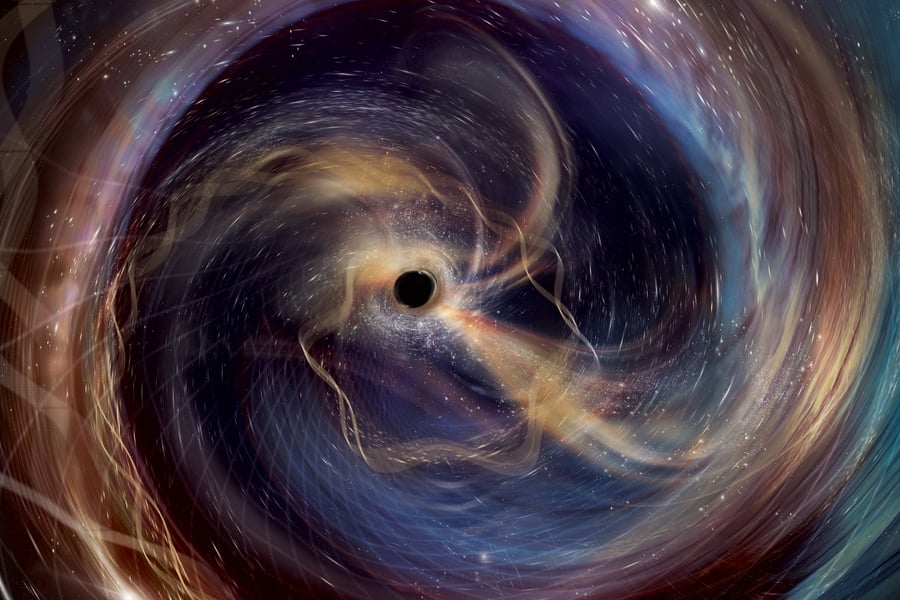
Black Hole Collisions Tell a Tale of Repeating Mergers
A recent study of gravitational waves from black hole mergers suggests that some black holes have merged multiple times, forming second-generation black holes. Scientists identified clues in the spin rates of these objects, with faster spins indicating prior mergers. This finding supports the idea of hierarchical merging, where black holes repeatedly collide in dense regions of galaxies, creating increasingly massive objects. The research provides new insights into the dynamic evolution of black holes in the universe.
Scientists have found evidence that some black hole mergers involve second-generation black holes formed from previous mergers.
This discovery helps astronomers understand how black holes grow and evolve over time, especially in crowded regions of galaxies.
It highlights the ongoing, dynamic processes in the universe that shape cosmic structures, offering new insights into the life cycles of stars and black holes.
upbeatBytes summarizes in its own words and links to the original publisher — it doesn't host the article.