
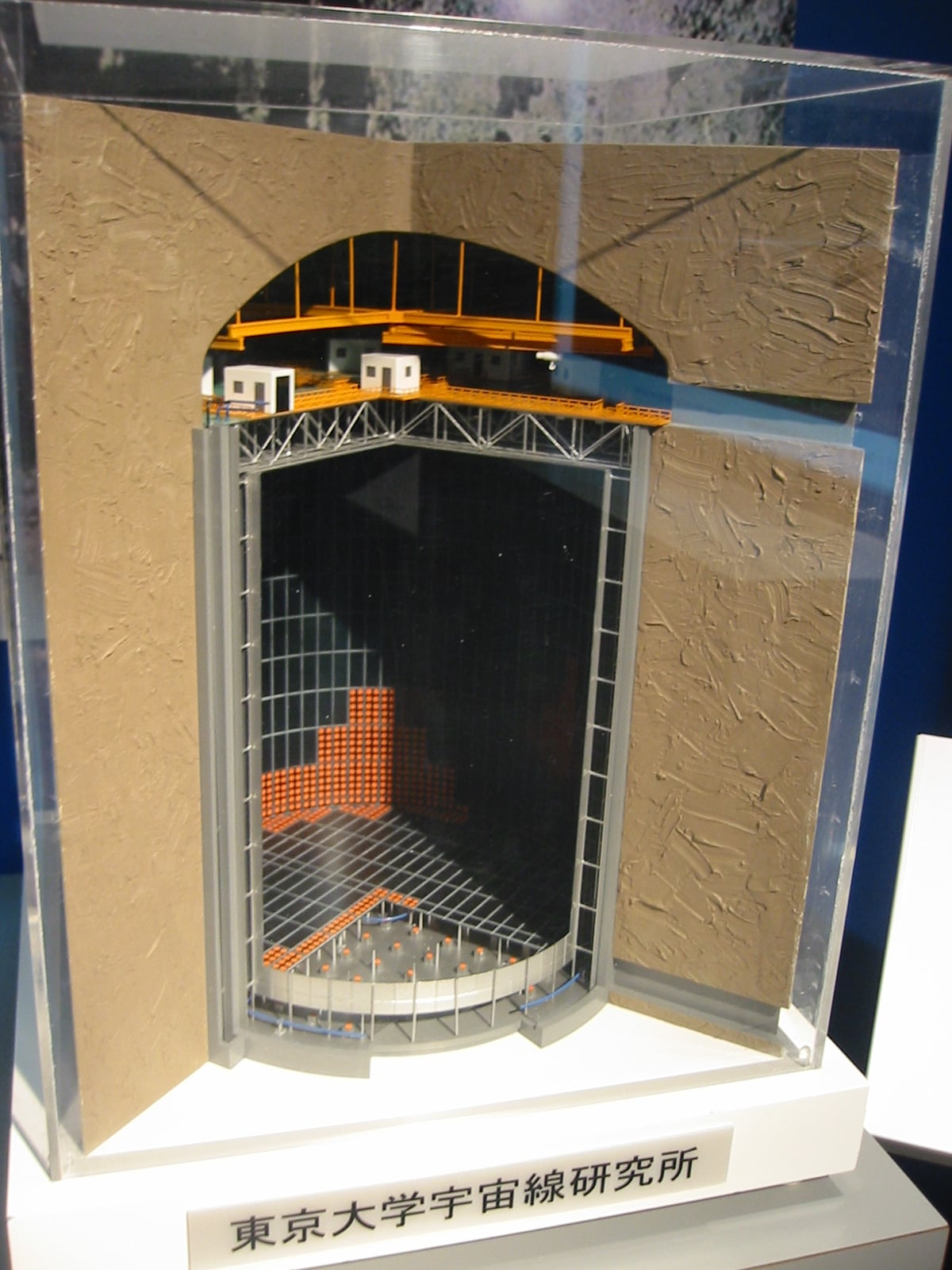
Listening for the Universe's Faintest Whispers, a Billion Supernovae at Once
Scientists at Japan's Super-Kamiokande observatory have detected a potential signal from the Diffuse Supernova Neutrino Background, a faint, cumulative glow from neutrinos emitted by supernovae across billions of years. The finding, based on data from over five thousand days of observation, shows a small but consistent excess of neutrino events at a specific energy level, suggesting the first hint of this long-sought cosmic signal. While the result is not yet confirmed, it represents a major step toward a new way of studying the universe's history of star formation and death. Researchers plan to combine data with future experiments to strengthen the signal and achieve confirmation.
Scientists in Japan detected a possible signal from the combined neutrino background of billions of supernovae, using the Super-Kamiokande detector.
This could provide a new way to study the history of star formation and cosmic evolution over billions of years.
It highlights human curiosity and persistence in uncovering the universe's secrets through careful, long-term scientific effort.
upbeatBytes summarizes in its own words and links to the original publisher — it doesn't host the article.