
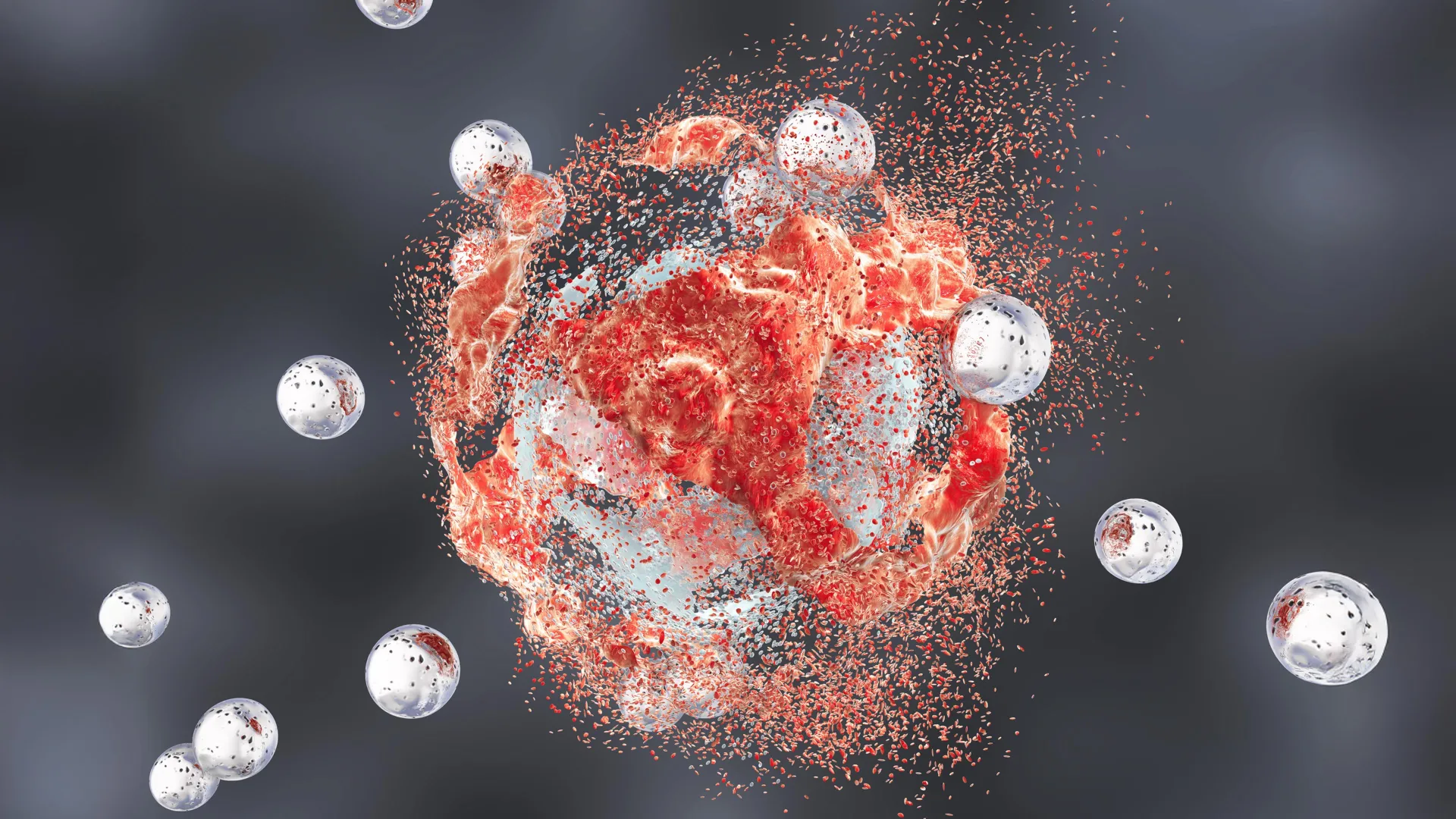
Tiny silica particles wiped out aggressive prostate cancer in mice
In a preclinical study, engineered silica nanoparticles were shown to eliminate aggressive prostate tumors in mice by inducing cell death and enhancing immune response. The particles, which are made from a naturally occurring form of silicon dioxide, transformed the tumor environment to make it more responsive to immunotherapy. This dual action led to complete tumor remissions in some mice, suggesting a potential new strategy for treating prostate cancer. The findings offer hope for future human trials and highlight the nanoparticles' ability to target cancer cells while sparing healthy tissue.
Scientists used tiny silica particles to destroy prostate cancer in mice, making tumors shrink and the immune system stronger.
This could lead to new cancer treatments that work better with immunotherapy and may one day help humans with aggressive prostate cancer.
The research shows how tiny particles can be designed to fight cancer directly and help the body's own defenses, offering hope for safer and more effective treatments.
upbeatBytes summarizes in its own words and links to the original publisher — it doesn't host the article.